
ImaginAi: engineering a connected education ecosystem.
How SynapsAi brings learner mobile experiences and instructor web workflows together around three education stakeholder needs.
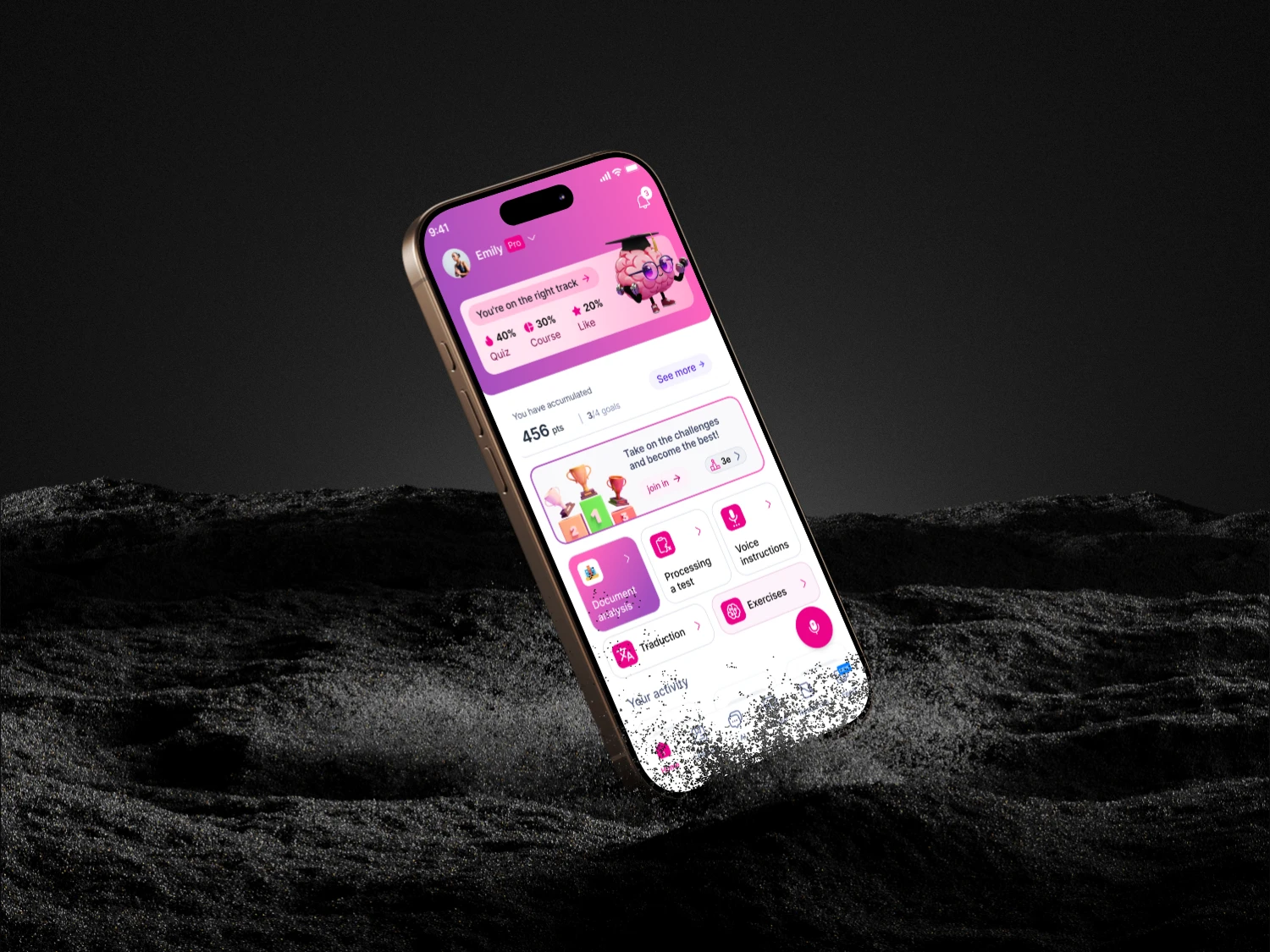
One education purpose.
More than one user journey.
ImaginAi combines a learner mobile product with ImaginAi Prof, a dedicated instructor web platform. The work is the design and delivery of connected experiences for different education roles.
- Scope
- Product strategy, UX, software and applied AI
- Platforms
- Mobile and web
- Public proof
- 143K+ learners · PROMEX 2025
Start with who needs to do what.
Understand. Practise. Progress.
WEB / INSTRUCTORSImaginAi ProfOrganize. Guide. Follow up.
A shared context for classroom operations, learning groups and follow-up.
Learners
Access explanations, practise and keep track of study beyond the lesson.
Instructors
Organize classes and tasks, follow activity and decide where guidance is needed.
Educational structures
Connect classroom organization with learner support and clearer follow-up.
Two platforms, because the work is different.
A learner’s study session and a teacher’s class-management workflow need different structures. A mobile learner experience makes room for explanations and practice; a web instructor experience makes room for groups, resources and follow-up.
SynapsAi’s product boundary keeps those purposes clear while bringing them into one ecosystem. Educational organizations provide the wider setting in which both roles operate.
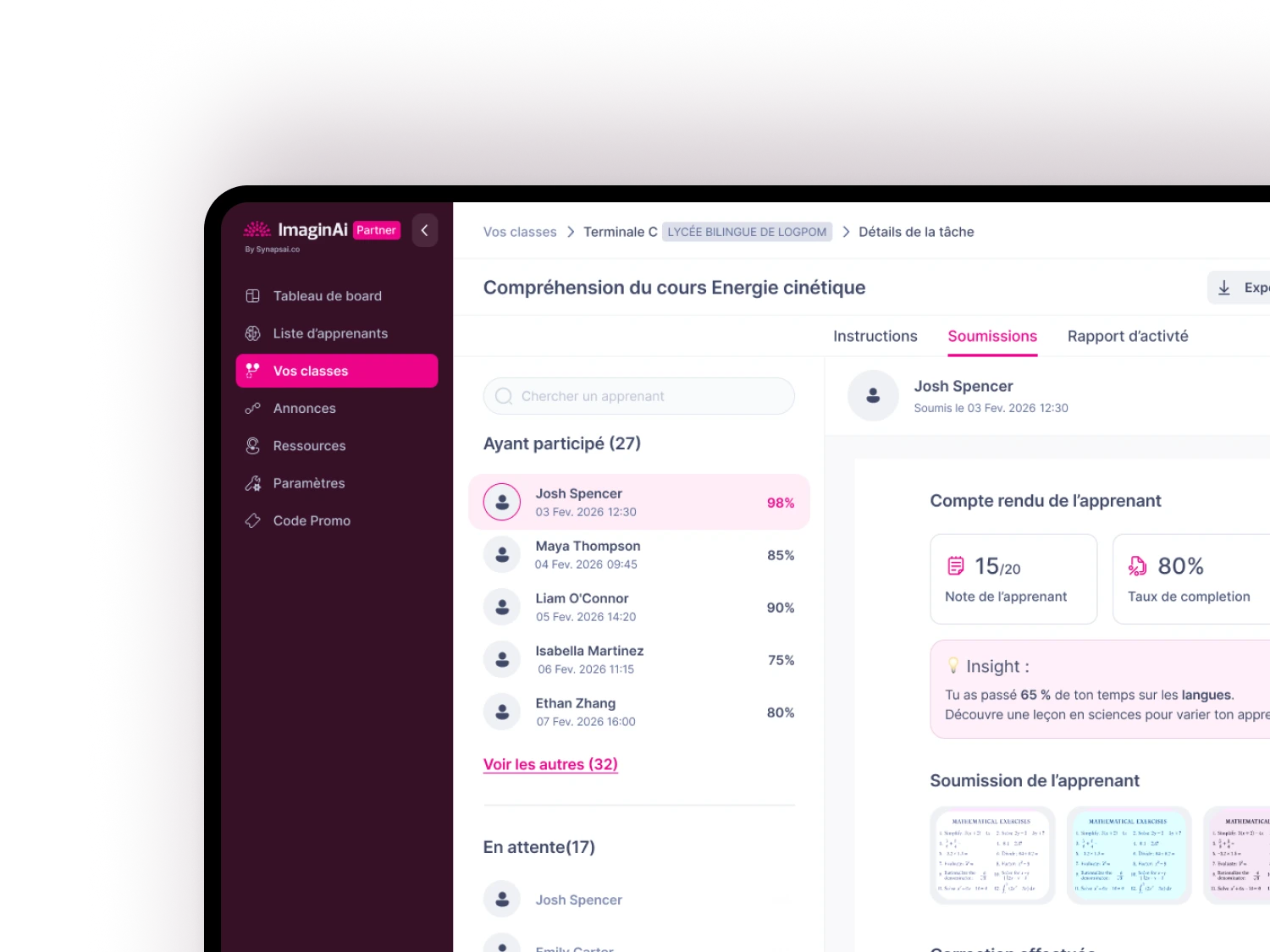
Connect the roles without collapsing them.
The shared workflow centres on learning groups, instructional activities, learner participation and follow-up. The mobile and web interfaces expose the parts relevant to each audience.
This is a product-level account of the relationship. An institution’s required access rules, integration points and reporting needs belong in a scoped deployment discussion.
The interface, the context and the system boundary.
The delivered scope brings mobile software, a responsive web platform and AI-powered learning into one product family. SynapsAi’s public product story supports those boundaries; it does not disclose a private infrastructure stack.
The resulting design questions are concrete: which role needs which information, how does an activity remain understandable across interfaces, and what happens when input or connectivity is incomplete? These are useful criteria for reviewing the ecosystem as it evolves.
Conceptual product boundaries, not a deployment or data-storage diagram.
From separate needs to a shipped product family.
The tangible result is a learner application and an instructor platform, supported by a dedicated product property at imaginai.io. The product scope includes learning paths, practice and progress on one side, and classes, resources, tasks and follow-up on the other.
The team’s 2026 CITS Douala bootcamp participation adds a documented moment of user discovery to this story. It supports a claim of participation and field engagement, not a controlled measure of learning improvement.
Company account of the CITS bootcampA shared purpose needs distinct experiences.
The ecosystem demonstrates SynapsAi’s ability to bring product thinking, design, software and AI together across platforms. Its central design lesson is the importance of audience boundaries: learner support, instructor workflow and institutional context should remain legible.
Further institutional requirements and product changes should be evaluated against actual needs. The next useful step is a clear context and a defined problem, rather than an assumed deployment or an unannounced feature roadmap.
Your next chapter starts with a conversation.
An idea, a challenge, or a process worth rethinking. We’d like to hear about it.
Talk to us